Decitect
Decitect puts the four-book Decision Architecture series to work. Draw the organisation you actually have: the teams, who waits on whom and who has to ask permission. Decitect scores its structure out of 100, lists every move open to you and grades each one from blunder to great, the way a chess engine grades a position.
Builds are published on the releases page as they ship.
Built on the Decision Architecture series
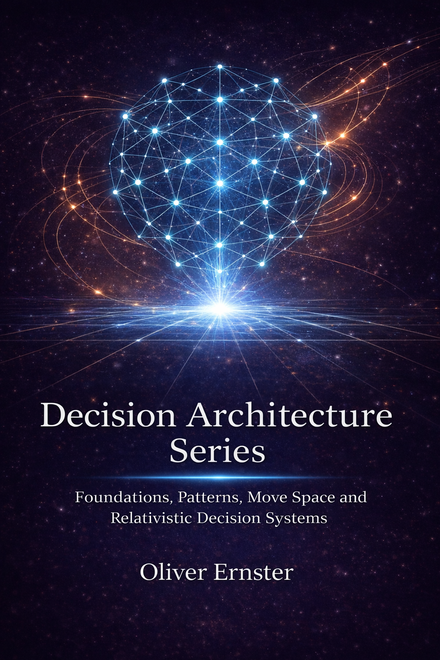
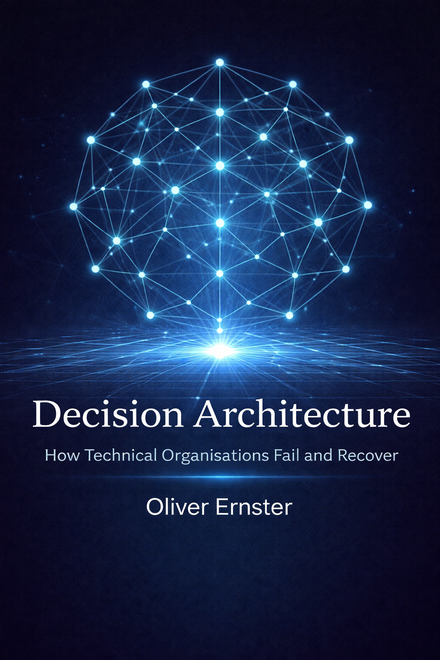
Decitect scores organisations with a model whose moves, signals and core ideas come from the Decision Architecture series by Oliver Ernster. The four volumes build the thinking the tool puts into play; the hardback collects all four in one reference edition.
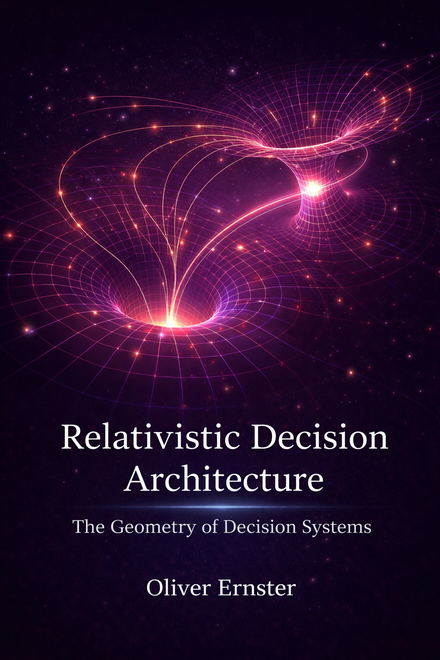
Decision Architecture (how organisations fail and recover) and Decision Architecture Patterns (the Gang of Four design patterns applied to organisations) lay the foundations; The Move Space builds on them to give Decitect its move classifications, from blunder to great; Relativistic Decision Architecture completes the theory.
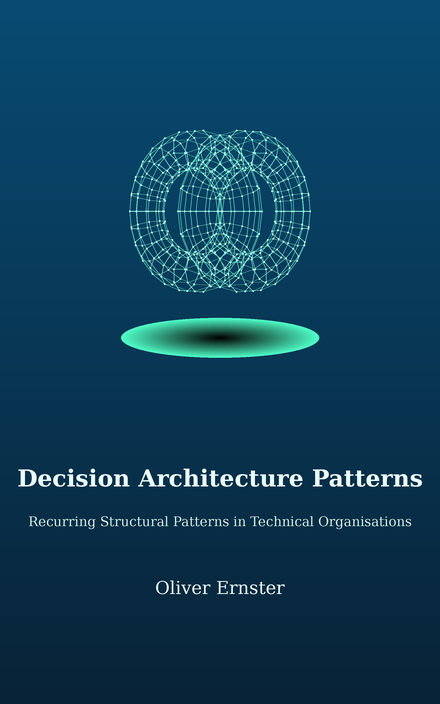
Decision Architecture Patterns
Structural patterns that recur across technical organisations
View on Amazon UK →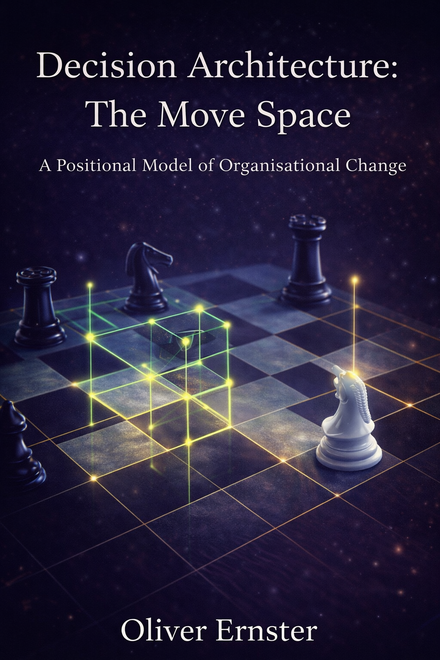
Built for the people who own structure
Decitect is a thinking tool for the roles that answer for how an organisation is shaped and how it decides: software architects, senior and principal engineers, CTOs and the wider C-suite.
Software architects
Reason about authority boundaries, coupling and dependency structure as a system you can score, not a diagram you argue over.
Senior and principal engineers
See why an organisation slows as it scales and which structural move removes the bottleneck instead of working around it.
CTOs and engineering leaders
Test a reorg, a delegation or a boundary change against the model before you test it on people, then read the trade-off as one number.
Founders and the C-suite
Make the shape of the organisation legible: where decisions stall, where authority is missing and where growth will bite.
Find your question
The detail lives on focused pages instead of one long scroll.
The tool
What each move and signal means in plain English, the board and the score, the guide that plans a stronger organisation move by move and the plan export you can send to a lead.
Why this exists
Why organisational theory needed an engine and what the numbers show.
What grounds the score
Every coefficient with its provenance, the assumptions the arithmetic rests on, the places the model is expected to be wrong and the test that would falsify it.
Download
Native builds for Windows, macOS and Linux. Free, local-first, no account.
Frequently asked questions
What is Decitect?
Decitect is free desktop software for organisational design. You model an organisation's teams, dependencies and authority; it scores the structure's health from 0 to 100 and grades every structural move from blunder to great, the way a chess engine grades a position. A guide plans a move-by-move line to a stronger structure.
Is Decitect free?
Yes. Decitect is free and open source, with the model under GPL-3.0 and the interface under LGPL-3.0. There is no paid tier, no licence key and no feature held back. A commercial licence is available separately for closed-source use.
Does Decitect send my organisation anywhere?
No. Everything runs on your machine with no account and no server. The only network call is an anonymous daily check of GitHub's releases API for a newer version.
Which platforms does Decitect run on?
Windows 10 and 11 (64-bit), macOS on Apple Silicon and Linux through Flatpak. Each has a native download.
What is Decision Architecture?
Decision Architecture is a four-book series by Oliver Ernster arguing that organisations succeed or fail by how their decisions are structured: where authority sits, how long decisions wait at boundaries and how incentives bend behaviour. Decitect makes that model executable.
How is the score calculated?
By a deterministic, hand-tuned evaluation function. It penalises backlog at boundaries, teams that cannot decide locally, incentive skew, contested ownership and fragmentation, with concentrated authority priced by the size it governs. Every coefficient is published. It is not fitted to outcome data; a blind external validation is specified but has not been run.
Can I model my own organisation?
Yes. A two-pane editor lets units nest to any depth with teams as the leaves, dependencies join any two items and authority claims capture matrix and dual reporting. Organisations import and export as JSON; built-in examples run up to a six-thousand-person enterprise.
Was Decitect previously called Fulcrum?
Yes. Fulcrum was renamed Decitect. Your settings and last session carry across on first launch; the Windows setup offers to remove an old Fulcrum install.
Supporting Decitect
Decitect is free and stays free. There is no paid tier, no licence key and no feature held back behind a donation. If it has saved you time or simply been useful, a contribution supports its maintenance and continued development. The same link sits in the app's own header, beside the light and dark toggle.
 Donate